
Hyper Flexible Drone Production
Flexible production that cost less than conventional systems
The nEUROn aircraft
When building drones the time to ramp up production is very short. Drones are constantly developed and the life-cycles are short. That puts out demands on quickly, and easily modify the assembly tooling. The standard approach requires long design and build lead-times for tools that become useless afterwards. In a previous project at SAAB they built the nEUROn aircraft. The time for development and ramp-up was very short; hence they needed a reusable, reconfigurable tooling concept instead of custom steel jigs. Early design of nEUROn changed rapidly. Conventional fixed jigs cannot adapt – every change would mean manufacturing parts of the tooling. Frequent changes required tooling that could be repositioned and reshaped without rebuilding it from scratch – that is why SAAB adopted Flexapods + BoxJoint.
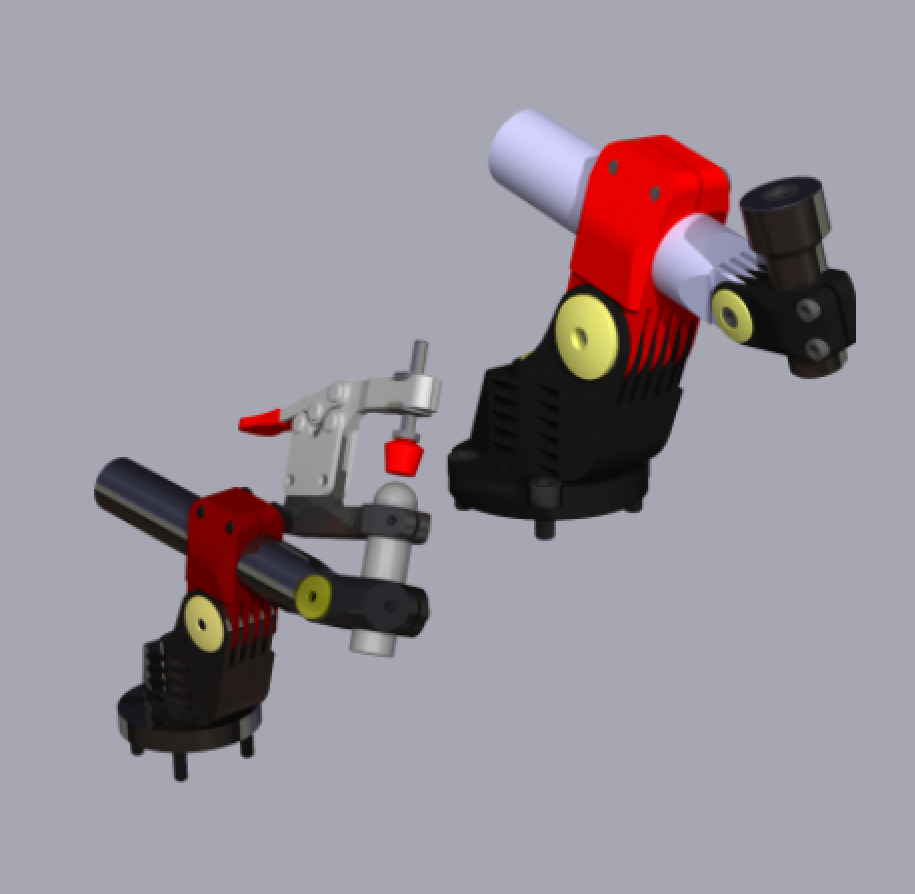
Large bottom tooling beams would block workers – people could trip or have limited under-fuselage access. That’s why we developed Pedestals to raise Flexapods and create ergonomic work volume.
SAAB wanted to stay agile by eliminating 2D drawings. Establishing 2D drawings is very time consuming work. This was removed and the 3D model was the master, containing all information necessary for the build-up. The concept of using Flexapods and BoxJoint use the 3D-model online as the tooling modules are built-up and adjusted. The metrology system is in-line with the CAD master and the adjustments are exposed on a operator panel showing graphics for the operator how to adjust.
Prodtex delivers the complete assembly system of BoxJoint and Flexapods to build an aircraft as nEUROn.

The nEUROn Aircraft (Photo courtesy of SAAB)
7 building steps
The nEUROn aircraft was built in 7 building steps. This gave the opportunity to take Flexapods from a previous building-step and re-use it for a later building-step; hence reducing the number of Flexapods. The setup time for one unit was less than 15 minutes; hence the operator was able to get +/- 0.1 mm within 15 minutes.


Inline with Metrology
The Flexapod Control Panel was the software interface that guided operators during tooling setup. After importing the Flexapod data file from CATIA, the panel displayed both the target position and the current measured position of each Flexapod top plate in 3D. Operators first performed a rough manual alignment, then attached Manual Manipulators on each leg for fine adjustment. A “leg window” showed live adjustment values per leg—positive/negative millimeter deltas—and changed colour to indicate when position accuracy reached tolerance, typically better than ±0.06 mm.
The Leica laser tracker and T-MAC probe provided measurement feedback. The laser measured position through interferometry while LEDs and a camera determined orientation. Mounted on the Flexapod or pickup point, the T-MAC transmitted 6D positional data into the Control Panel, allowing real-time convergence to the target coordinates without having encoders or sensors in the Flexapods themselves. This enabled high precision with manual hardware by calculating leg lengths mathematically rather than measuring them directly.

Rough adjustment

Fine adjustment +/- 0.1 mm
Economic Benifits
Saab’s economic analysis showed that although Flexapods and BoxJoint hardware cost ~25% more than traditional welded fixtures, the overall investment was significantly cheaper when considering time and reuse. Traditional welded tooling demanded long concept development, detailed 2D drawing work, and physical fabrication—resources that would be discarded after a single prototype. With Flexapods and BoxJoint, tooling design became modular and repeatable, enabling rapid configuration changes instead of rebuilding equipment. This reduced man-hours by 36% in concept work, up to 81% in detailed design, and ~58% in physical build time, according to Saab’s internal comparison. The result was a 13% lower total project cost even on the first aircraft, with future programs projected to save up to 74% by reusing tooling instead of repurchasing. In short, Saab invested because the system provided a financially defensible, faster, and reusable tooling strategy, ideal for prototype or low-volume aerospace builds.


Write Brothers Medal
The build-up of the un-manned aircraft nEUROn received the Write Brothers Medal:
Wright Brothers Medal 2011. Awarded Henrik Kihlman for the best technical paper related to the invention, development, design, construction or operation of an aircraft and/or spacecraft.
The same year this delivery also achieved the Swedish Assembly Award.
Swedish Assembly Award 2010 from Swedish Assembly Forum, “Henrik Kihlman, Magnus Engström and Gilbert Ossbahr have in their research- and development work been driven by one common vision – to replace the todays dedicated assembly fixtures with reconfigurable ones. The first industrial application exists at Saab, for the manufacturing of the fuselage on the un-manned aircraft nEURON. The laureate’s technology has thereafter been implemented on other industries. This shows the holistic utilization of the technology. The development work is a good example on effective cooperation between industry and academia. The laureate’s work makes a exemplary for industry as well as academia.


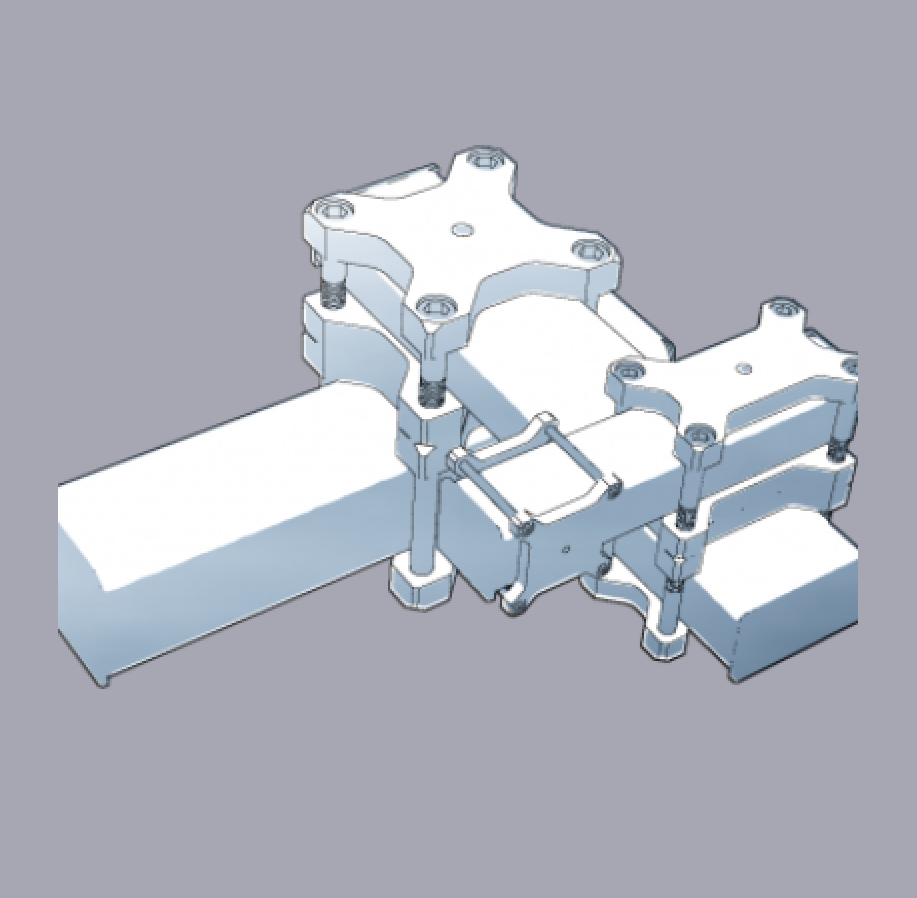
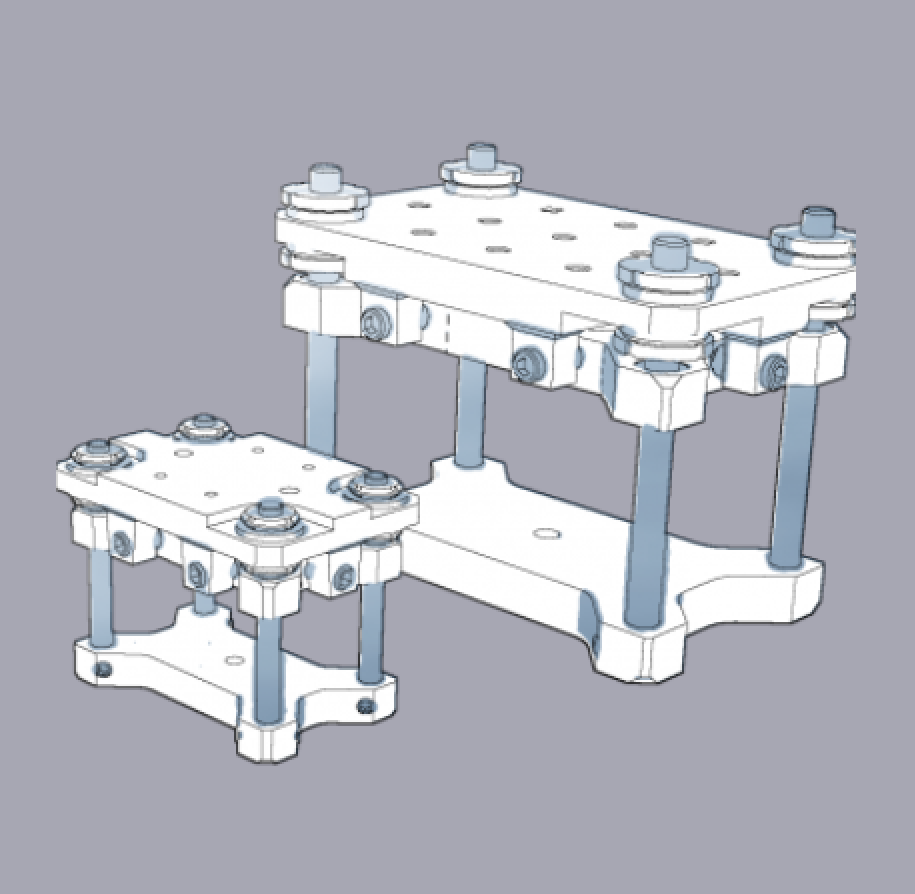
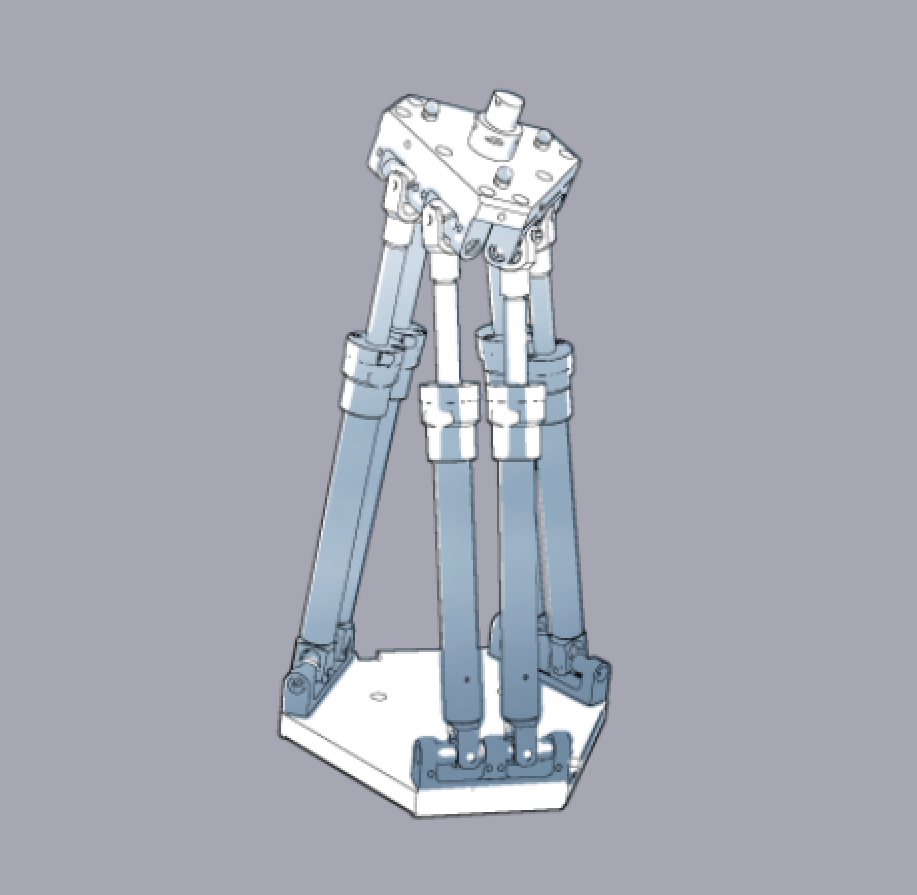
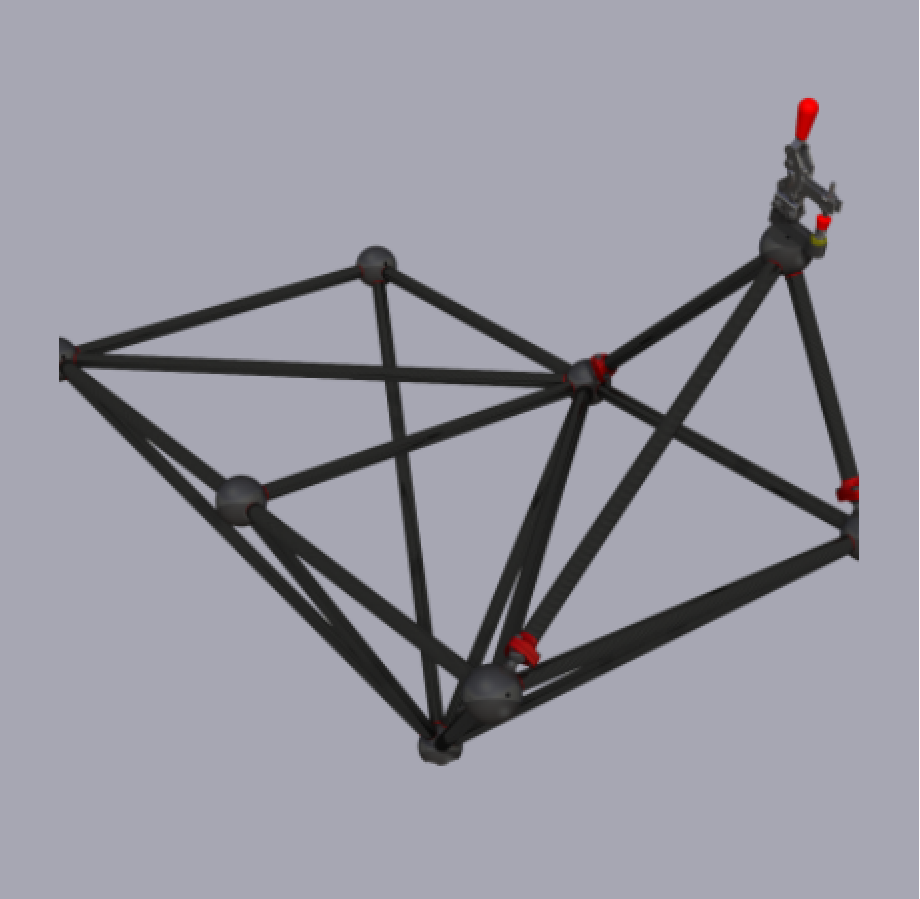
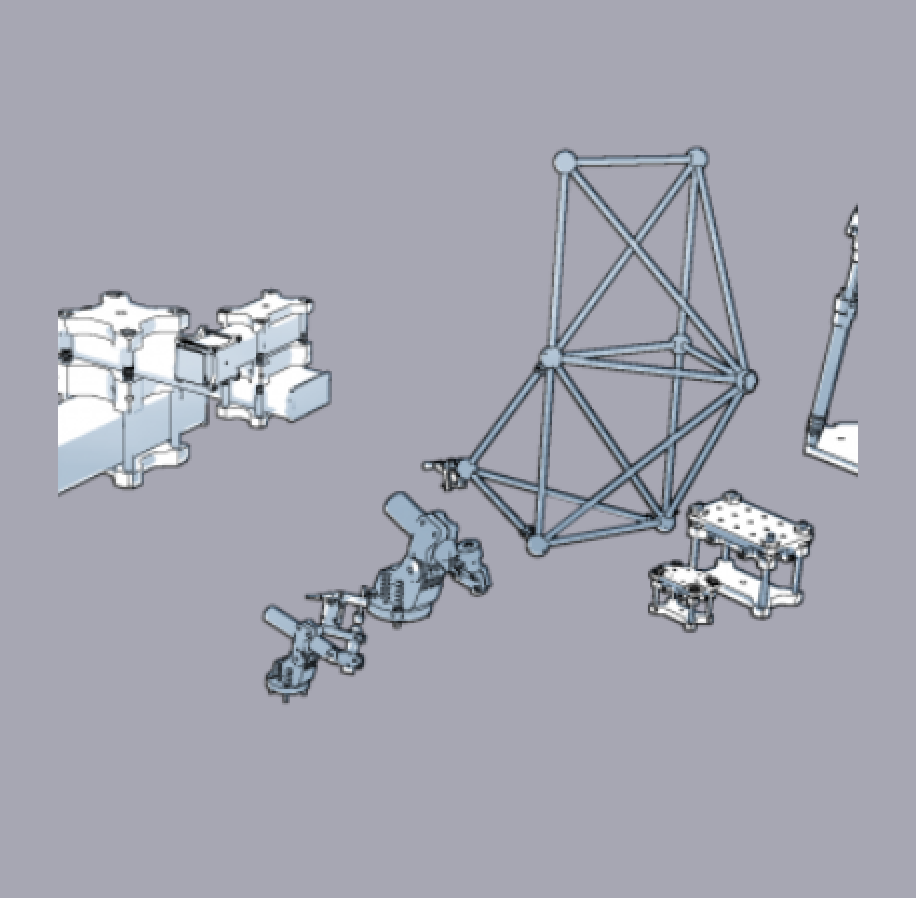
The solution presented on this page uses our range of hyper flexible tooling modules – The framework made by BoxJoint and the hyper-flexible tooling modules Flexapod

Contact Henrik to learn more about this technology:
Phone: +46 731 558102
E-mail: henrik.kihlman@prodtex.com